There’s a moment, right before the doorbell rings, when the room feels like a stage set for someone else’s story. I’ve spent years building that stage - not with velvet curtains or spotlights, but with playlists. My soundtrack isn’t just background noise. It’s armor. It’s memory. It’s the quiet rebellion against the idea that sex work is just a transaction. It’s the part of me that still gets to choose how I feel, even when the world tries to reduce me to a service.
Some people find comfort in candles or incense. I find it in the bassline of a track I first heard in a Berlin subway station. That’s where I stumbled across euro escort uk - not because I was looking for work, but because I was looking for a name that didn’t sound like a cliché. I saw it on a flyer taped to a lamppost, next to a poster for a queer cabaret night. It didn’t mean anything to me then. But later, when I started building my own brand, I realized how much I needed that kind of language - unapologetic, European, a little mysterious. It became a reference point. Not for who I was, but for who I wanted to sound like when I talked to clients.
I used to think music was just a way to pass time. Then I started working. The first time a client asked if I "liked the music," I froze. I hadn’t even realized I’d left on a playlist I’d made for my own sanity. It was a mix of early 2000s R&B, Icelandic ambient, and one track by a Ukrainian lo-fi artist I found on Bandcamp. I told him yes. He smiled. Said it made him feel "less like he was paying for something and more like he was sharing a moment." That’s when I knew: the music wasn’t for me. It was for both of us.
Now, every client gets a tailored playlist. No two are the same. Some want silence. Others want something loud enough to drown out their own thoughts. I don’t ask why. I just listen to the way they breathe when they walk in. If they’re tense, I play something with a slow pulse - a track like "Lose Yourself" by Eminem, but slowed down to 70% speed. If they’re quiet, I go for jazz. Nina Simone, but not the famous ones. The rare live recordings from Paris in ’67. The ones where she laughs between verses.
There’s a whole industry built around the idea of the "girl escort uk" - polished, predictable, always smiling. Ads with the same lighting, the same pose, the same filter. It’s not just boring. It’s exhausting to watch. Because none of those women sound like me. None of them have playlists that include the sound of rain on a tin roof or a 12-year-old YouTube video of a woman singing opera in a Tokyo karaoke booth.
I’ve had clients who came in expecting the "uk glamour girls escort" stereotype. The ones who think they’re booking a fantasy. I don’t correct them. I just turn up the volume on a track I made myself - a loop of my own voice whispering lines from Virginia Woolf, layered over a beat I chopped from a vinyl I bought at a thrift store in Brighton. They sit down. They listen. And then they say, "I didn’t know you could do this."
I didn’t know either, until I tried.
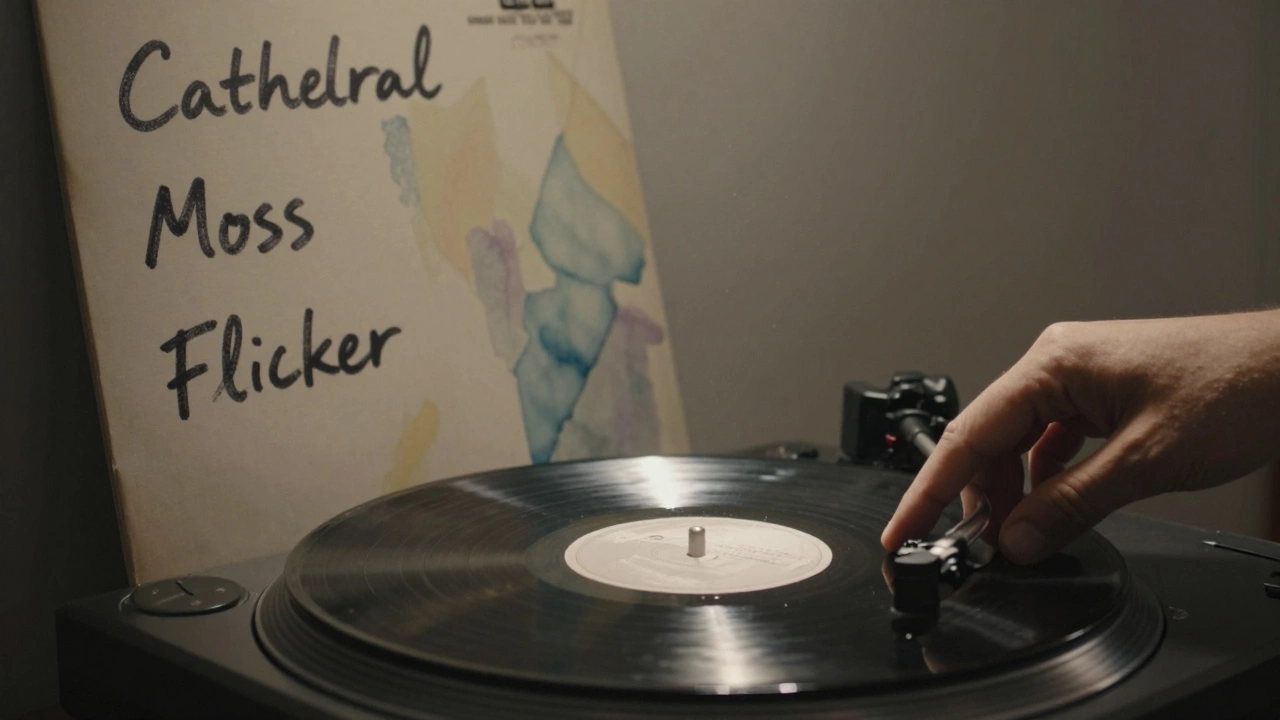
My playlists aren’t on Spotify. They’re on a locked USB drive I carry in my purse. Each one has a name that means nothing to anyone else: "Cathedral," "Cigarette After," "The One Who Left Without Saying Goodbye." I don’t explain them. I don’t need to. The music does the talking.
One playlist, "Moss," is just field recordings from the Pacific Northwest - the crunch of wet leaves, a distant train, the hum of a fridge in an empty house. I play it for clients who’ve just lost someone. I don’t ask. I don’t offer tissues. I just let the silence breathe.
Another, called "Flicker," is 47 minutes of broken analog synths and distorted radio static. I play it for the men who talk too much. The ones who need to fill every second with words. After five minutes, they stop. They just stare at the ceiling. That’s when I know it’s working.
People assume sex work is about sex. It’s not. Not really. It’s about control. About boundaries. About reclaiming the right to say, "This is how I want to be seen."
My soundtrack isn’t sexy. It’s honest. It’s messy. It’s full of mistakes - a wrong note here, a crack in the voice there. That’s the point. I’m not here to be perfect. I’m here to be real. And if a client walks out feeling like they were part of something human, not just a service, then I’ve done my job.
I don’t call myself a sex worker because I like the word. I call myself one because it’s true. But I don’t let the label define me. My identity lives in the gaps - between the notes, in the silence between tracks, in the way a song can make someone cry without ever saying a word.
Last week, a client left me a note on the table. "Thank you for the music," it said. "I didn’t know I needed to hear my own voice again." I didn’t write it. I didn’t ask for it. But I kept it.
I added a new track to my "Moss" playlist. It’s just me, humming. No instruments. No effects. Just breath and tone. I don’t know if I’ll ever play it for anyone else. But I know this: when I’m alone, and the world feels too loud, I press play. And for a few minutes, I’m not a service. I’m not a fantasy. I’m just a woman, listening to herself.
That’s the soundtrack no one else can buy.